
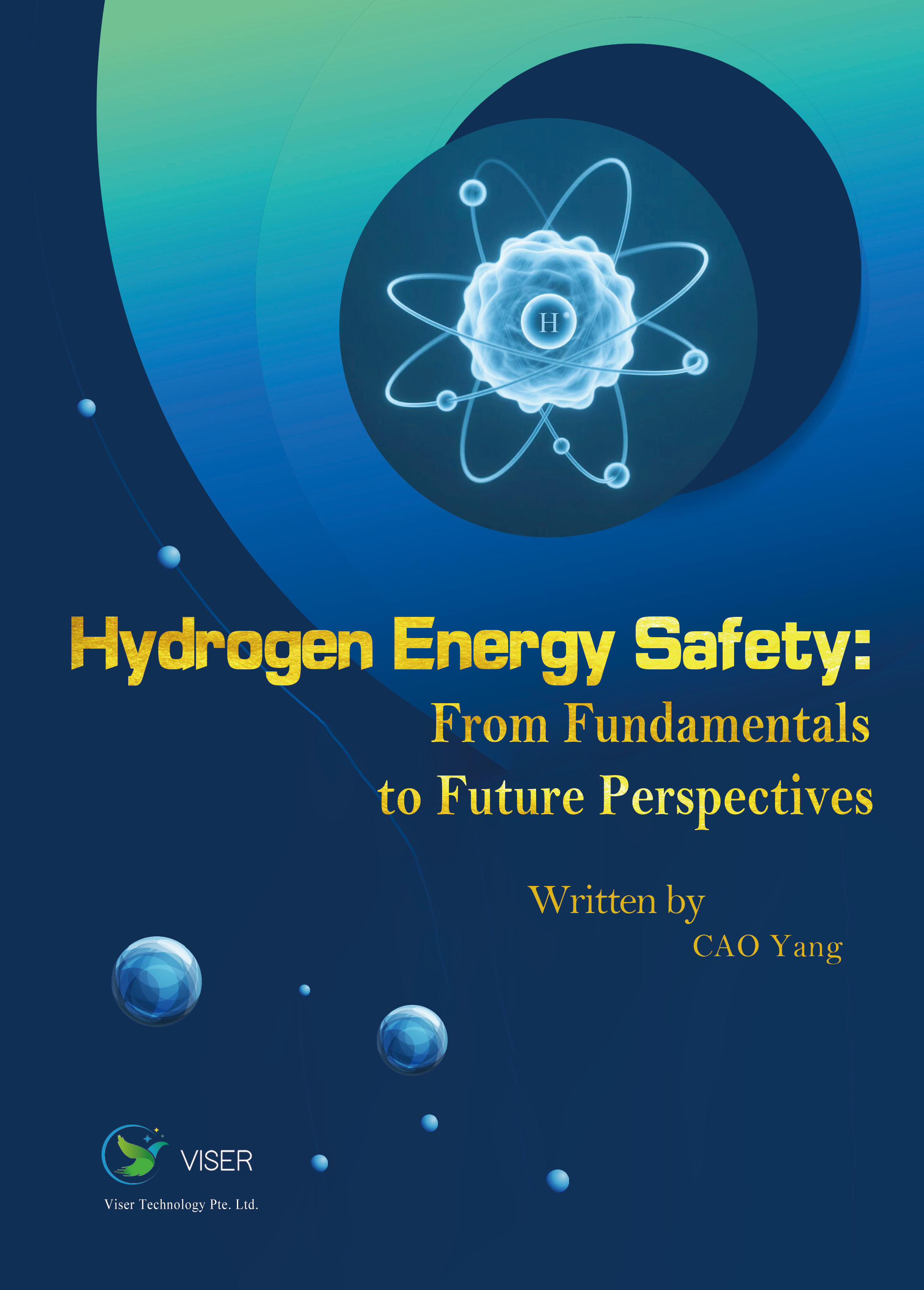
Hydrogen Energy Safety: From Fundamentals to Future Perspectives
Language: 英文
Author: CAO Yang
Publisher: Viser Technology Pte. Ltd.
ISBN: 979-8-9573-3227-5
Publication Date: 2025-08-25
Category: engineering technology
Pages: 588
Price: ¥ 45
Searchable On:
Book Introduction
Content Introduction
HydrogenEnergy Safety: From Fundamentals toFuturePerspectives is a monograph that systematically explores the safety issues of hydrogen energy. It analyzes the basic theory of hydrogen energy, its physical and chemical properties, and wide range of applications, while elaborating on safety technologies and management measures in key areas such as hydrogen production, storage and transportation, refueling, and fuel cells. At the same time,the monograph proposes scientific and effective prevention,control strategies, and precautionary measures against potential safety hazards, including hydrogen leakage, fire, explosion, equipment failure, and human factors. Additionally, the monograph also looks forward to the future directions for innovation in hydrogen energy safety technology, discussing the improvement and development of the hydrogen energy safety management system, as well as the far-reaching impact of hydrogen energy safety on sustainable societal development. Rich in content and logically rigorous,the monograph provides valuable references and guidance for professionals and researchers in the hydrogen energy field.
Preface
Amid the global push to combat climate change and accelerate green energy transformation, hydrogen energy, as one of the most promising clean energy sources, is experiencing unprecedented development opportunities. With abundant sources, high energy density, and zero carbon emissions, hydrogen energy plays an irreplaceable role in achieving carbon peaking and carbon neutrality. As major economies worldwide release hydrogen energy development strategies, hydrogen technologies continue to make breakthroughs, the industrial chain becomes increasingly mature, and application scenarios expand — from transportation and industrial manufacturing to energy storage and grid regulation. Hydrogen energy is gradually becoming a core component of the modern orm production technologies are maturing, providing robust support for the construction of clean, low-carbon, safe, and efficient energy systems, while injecting fresh momentum into the sustainable development of the global economy.
However, the development of the hydrogen energy industry also faces numerous challenges, among which safety is particularly critical. Given hydrogen's physical and chemical characteristics —— such as its tendency to leak, flammability, and explosiveness — ensuring safety across production, storage, transportation, and application is crucial for the healthy growth of the entire industry. As the scale of hydrogen energy projects expands, global attention to hydrogen safety is increasing, prompting the ongoing improvement of relevant standards, regulations, and technical guidelines. In this context, strengthening hydrogen safety research, enhancing risk prevention and control capabilities, and building scientific and efficient safety management systems are not only essential for safeguarding lives, property, and social stability but also strategically important for promoting the high-quality development of the hydrogen energy industry and achieving the green transformation of the global energy landscape.
This monograph, Hydrogen Energy Safety: From Fundamentals to Future Perspectives, addresses safety issues throughout the hydrogen energy life cycle. It comprehensively analyzes the physicochemical properties of hydrogen, production processes and their associated safety concerns, and thoroughly explores safety design and risk control strategies for storage and transportation technologies, refueling infrastructure, and hydrogen fuel cell systems. Additionally, it provides an overview of hydrogen leakage detection, safety assessment models, and intelligent warning systems, proposing preventive and control measures against potential hazards such as fire, explosion, equipment failures, and human error. Building on this foundation, the monograph also looks ahead to future trends in hydrogen safety technology, paths for improving safety management systems, and their critical roles in achieving carbon neutrality. It aims to provide both theoretical support and practical guidance for professionals in hydrogen technology research, safety management, and policy development.
Finally, the successful completion of this monograph owes a great deal to the support and guidance of many experts and scholars, as well as to the team's years of experience and dedication in the field of hydrogen safety. Given the broad scope and complexity of this work, some oversights may be unavoidable, and we warmly invite readers to share their valuable feedback and suggestions via ycao@njtech.edu.cn.
Table of Contents
Chapter 1 Hydrogen Energy Overview / 1
Section I. Basic Theory of Hydrogen Energy / 1
Section II. Physical and Chemical Properties of Hydrogen / 6
Section III. Utilization of Hydrogen Energy / 16
Chapter 2 Hydrogen Production Technologies and Their Safety / 31
Section I. Preparation of Hydrogen / 31
Section II. Safety Technologies for Hydrogen and Oxygen Stations for Electrolytic Hydrogen Production / 39
Section III. Safety of Hydrogen from Fossil Fuels, Hydrogen from Biomass, and Hydrogen from Nuclear Energy / 62
Section IV. Safety in the Operation and Maintenance of Production Equipment for Hydrogen Production Jobs / 73
Chapter 3 Hydrogen Storage and Transportation Technologies and Their Safety / 81
Section I. Hydrogen Storage / 81
Section II. Transportation of Hydrogen / 93
Section III. Hydrogen Refueling / 105
Section IV. Risk Analysis and Control of High Pressure Hydrogen Storage / 112
Section V. Hydrogen Transportation Safety / 118
Section VI. Safety Management of Hydrogen Refueling Stations / 145
Chapter 4 Hydrogen Fuel Cell Safety / 164
Section I. Hydrogen Fuel Cell Fundamentals / 164
Section II. Hydrogen Electric Safety Design for Hydrogen Fuel Cell Vehicles / 182
Section III. Fuel Cell System Safety Design for Hydrogen Fuel Cell Vehicles / 202
Section IV. Fuel Cell Stacks and Their Safety Design / 239
Chapter 5 Hydrogen Energy Early Warning Methodology / 260
Section I. Hydrogen Leak Detection Technology / 260
Section II. Security Risk Assessment Model / 281
Section III. Intelligent Early Warning System / 307
Chapter 6 Hydrogen Energy Safety Hazards and Preventive Measures / 333
Section I. Hydrogen Leakage Risks and Preventive Measures / 333
Section II. Fire and Explosion Hazards and Prevention and Control Strategies / 351
Section III. Hydrogen System Equipment Failure and Prevention / 380
Section IV. Human Factors Caused Safety Hazards and Management / 412
Chapter 7 Hydrogen Energy Security Future Outlook / 441
Section I. Innovative Directions for Hydrogen Energy Security Technologies / 441
Section II. Improvement and Development of Hydrogen Energy Safety Management System / 471
Section III. Impact of Hydrogen Energy Security on Social Sustainability / 493
Section IV. Synergistic Development of Hydrogen Security and Carbon Neutral 515 Policies / 515
Section V. Internationalization of Hydrogen Safety Standards / 544
Section VI. Security Challenges in Emerging Application Scenarios / 568
Bibliography / 586
Get Publishing Solutions
Are you interested in publishing your research? SCHOLINK offers comprehensive publishing services to help you share your work with the academic community.