
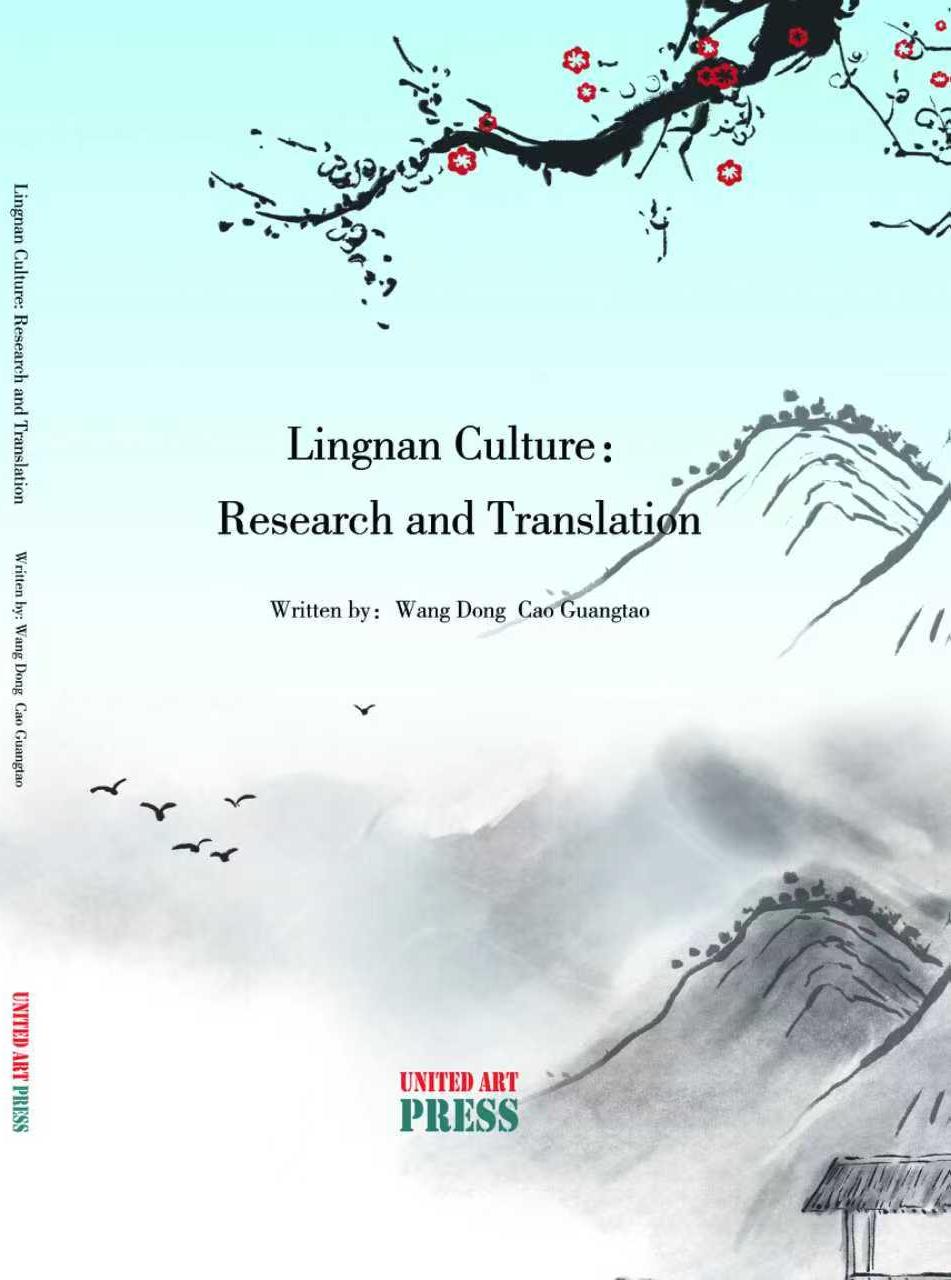
Lingnan Culture: Research and Translation
Language: 英文
Author: Wang Dong, Cao Guangtao
Publisher: United Art Press
ISBN: 979-8-89378-917-1
Publication Date: 2025-08-26
Category: literature
Pages: 192
Price: ¥ 50
Searchable On:
Book Introduction
Content Introduction
Against the background of globalization and frequent cultural exchanges, this book focuses on helping Lingnan culture break language barriers and realize international communication. Based on years of in-depth research, the authors completed this work through dozens of field investigations, interviews with artists, and sorting out first-hand materials from various Lingnan cultural carriers, aiming to build a cross-linguistic bridge for the inheritance and global dissemination of Lingnan culture.
Centering on the English translation of Lingnan culture, the book conducts in-depth research on different cultural and artistic forms. It goes beyond the simple analysis of Cantonese Opera, explores its cultural connotation and the way to achieve spiritual resonance through language conversion, and studies the current situation and related theories of its English translation. For less concerned folk arts such as Northern Guangdong Tea-picking Opera and Shitang Yue Jie Songs, the book interprets the English translation methods of their dialect features and makes detailed academic analysis, helping these rural artistic voices move towards the world. In addition, it also focuses on Lingnan Buddhist culture, exploring its unique evolution and influence in the Lingnan context through cases like Lianshe Buddhist Nunnery and Monk Dangui.With theoretical depth and practical value, this book provides useful references for relevant researchers. The authors also admit that there is room for improvement in the research on the translation of some endangered artistic forms and the improvement of theoretical frameworks. Overall, the book is expected to help the world understand the profound heritage and vivid vitality of Lingnan culture through accurate and in-depth translation research.
Preface
As an important part of China's excellent traditional culture, Lingnan culture occupies an irreplaceable position in the Chinese cultural spectrum with its inclusive spirit and distinctive features. As the wave of globalization promotes increasingly frequent cultural exchanges, how to help Lingnan culture cross language barriers, reach a broader world, and tell Lingnan stories well in English has become an urgent topic. We have been deeply engaged in this field for many years and have made a profound response to this proposition with this new work. We conducted field investigations and researches in Cantonese Opera and Tea-picking Opera troupes, Yue Jie Songs, and Buddhist temples for dozens of times. We interviewed many artists, consulted local chronicles and documents, collected and sorted out first-hand materials, conducted systematic research, and finally completed this book after several years. With solid investigation, profound theoretical foundation and innovative research perspective, this work builds a cross-linguistic bridge for the inheritance and international communication of Lingnan culture.
Cantonese Opera, as a landmark art of Lingnan culture, has long enjoyed a reputation at home and abroad. However, we did not stop at the research and analysis of Cantonese Opera art, but delved into the cultural connotation of Cantonese Opera performance art, revealing how Cantonese Opera can achieve spiritual resonance through language conversion. In addition, we have investigated the current status in the English translation of Cantonese Opera, and conducted a series of theoretical studies concerning its English translation.
Tea-picking Opera in northern Guangdong and the Shitang Yue Jie Songs, these artistic forms carrying Lingnan's folk wisdom, rarely entered the vision of research or translation before.
This book, however, interprets the English translation paths of the dialect characteristics of Tea-picking Opera and makes a delicate academic analysis of Shitang Yue Jie Songs and their translation approaches, enabling the voices of the countryside to have the possibility of going to the world. The book's research on Lingnan Buddhist culture, ranging from the Buddhist Cultural Heritage of Lianshe Buddhist Nunnery to the national feelings of celebrated Monk Dangui, highlights the unique evolution and influence of Buddhist culture in the Lingnan context.
We have taken years of painstaking efforts, traveled through urban and rural areas of Lingnan for field trips and investigations, compared dozens of Chinese and foreign documents, and finally completed this work that combines theoretical depth and practical value. Of course, the research on the translation of Lingnan culture is a long-term project. There is still much room for expansion in the book's research and discussion on the translation of some endangered artistic forms, and some theoretical frameworks need to be further improved in practice. It is believed that the publication of this work will not only provide useful references for researchers but also enable the world to understand the profound heritage and vivid vitality of Lingnan culture through words.
Table of Contents
Preface / iii
Part I Foshan Cantonese Opera and Its Translation / 1
Chapter One: Research in English World of Cantonese Opera / 2
Chapter Two: The Folklore Ecology of Foshan Cantonese Opera / 17
Chapter Three: The Current Status of and Theoretical Proposals
for the English Translation of Foshan Cantonese Opera / 32
Chapter Four: A Study on the Subtitle Translation
of The Qing Imperial Court / 43
Chapter Five: English Translation Standards
of Foshan Cantonese Opera Classics / 58
Part II Yuebei Tea-Picking Opera and Its Translation / 69
Chapter Six: A Survey on the Performance Customs
of Yuebei Tea-Picking Opera / 70
Chapter Seven: The Origin, Inheritance and Protection
of Yuebei Tea-Picking Opera / 87
Chapter Eight: Research on the Subtitle Translation
of Yuebei Tea-picking Opera —Taking the Traditional
Tea-picking Opera A San Teases Landlord Lu as an Example / 112
Part III Shitang Yuejie Songs / 120
Chapter Nine: The Artistic Themes of Shitang Yuejie Songs / 121
Chapter Ten: The Folk Beliefs of Shitang Yuejie Songs / 137
Chapter Eleven: Translation Strategies for Shitang Yuejie Songs / 152
Part IV Buddhism Culture / 159
Chapter Twelve: Inheritance and Protection of Buddhist Cultural
Heritage Lianshe Buddhist Nunnery of Foshan / 160
Chapter Thirteen: An Analysis and Historical Assessment on
the Celebrated Monk Poet Dan Gui's National Integrity / 171
References / 187
Get Publishing Solutions
Are you interested in publishing your research? SCHOLINK offers comprehensive publishing services to help you share your work with the academic community.